
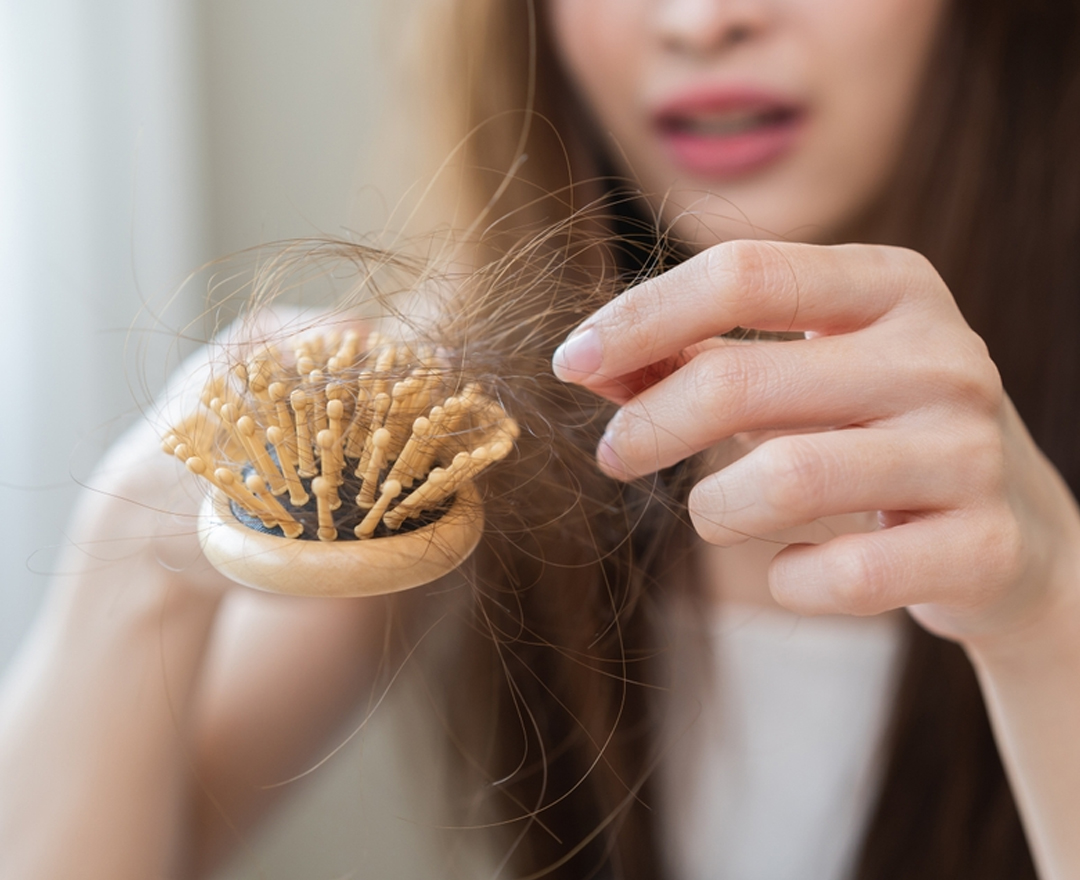
Hair fall treatments include medications like minoxidil and finasteride, surgical procedures like hair transplantation, and other options such as platelet-rich plasma (PRP) therapy, laser therapy, and microneedling. Lifestyle adjustments, including a balanced diet rich in vitamins and minerals and managing stress, are also crucial for supporting hair health.
Medical and surgical treatments
- Minoxidil: An over-the-counter topical treatment available in liquid, foam, or shampoo that can help slow hair loss and regrow hair over time.
- Finasteride: A prescription oral medication for men to treat male pattern baldness.
- Hair transplant: A surgical procedure where hair follicles are moved from a denser area of the scalp to thinning areas.
- Platelet-rich plasma (PRP) therapy: Involves injecting a concentration of your own platelets into the scalp to stimulate hair growth.
- Laser therapy: Low-level laser therapy can help stimulate hair follicles.
- Microneedling: A procedure that uses fine needles to create tiny punctures in the scalp, which can stimulate hair regrowth.
- Treating underlying causes: If hair loss is due to an underlying condition or medication, treating that specific cause is necessary.